
|
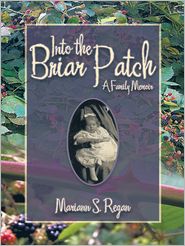
I'm pleased to introduce to you Mariann S. Regan, author of the book, Into the Briar Patch, which she describes on her website "...as a memoir about the author's maternal family, who were farmers in South Carolina from the early 1800s through recent years. It explores the long-term effects of slaveholding upon white Southerners, and it questions the makeup of good and evil." I look forward to reading and reviewing her memoir in the coming weeks. In her guest post today, she gives a little background to her memoir. Enjoy! ~Caroline
Disclosure: I am an affiliate of both Amazon.com and Barnes and Noble which means if you click on one of their links, you will be directed to their website. If you decide to purchase while you are on their site, which is totally up to you, I may receive a small referral or sales commission for referring you. For more information, please visit my Disclosure page.
1 Comment
 Today, I'm guest posting over on the blog for Family Tree Magazine UK with a wrap-up of the RootsTech 2012 Conference.
So what are you waiting for? Go read it. ;) Also? Connect with Family Tree Magazine UK: ~Caroline I totally had an unplan plan for RootsTech. Then I arrived at Rootstech. Then I chunked my unplan plan for another unplan. And I ended up doing interviews and only attended 1 full session. But? I have 7 interviews to share with y'all. Video Interviews
Audio Interviews
Old-School Interviews
So, as I get these interviews ready for sharing, here's some pics I managed to take in between those interviews and that 1 session I attended. And? Keep an eye out for other attendees' photos. I remember smiling for people. A lot. ;) ~Caroline   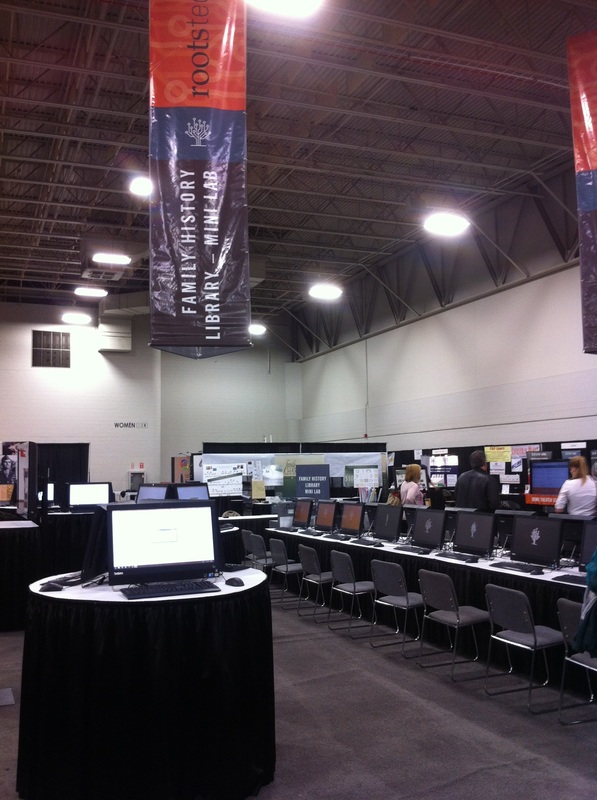 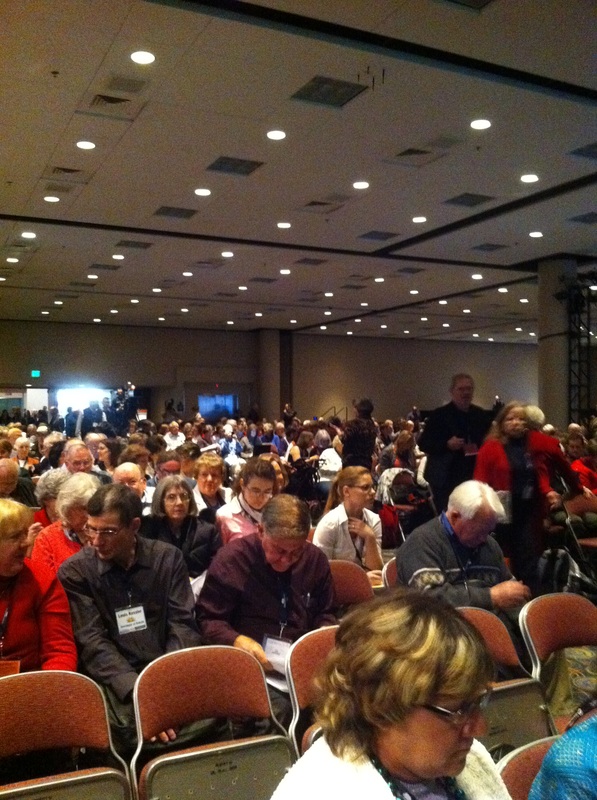  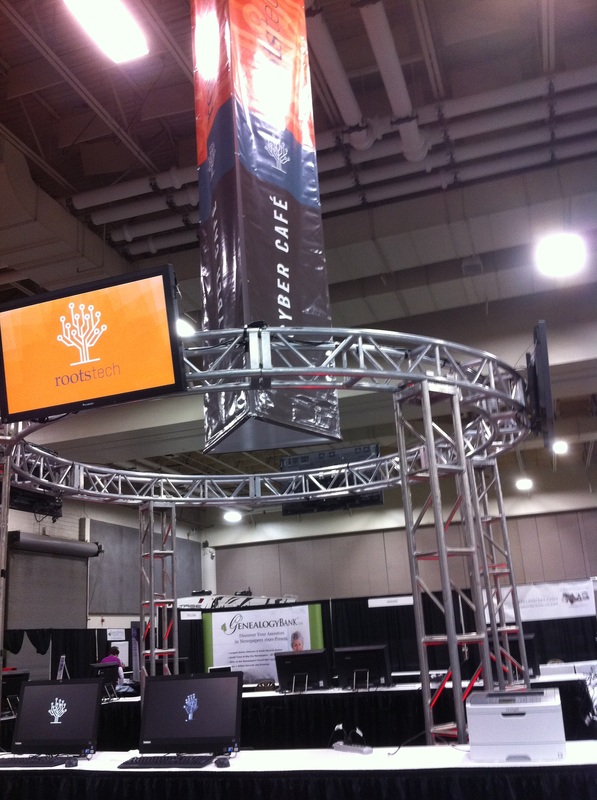   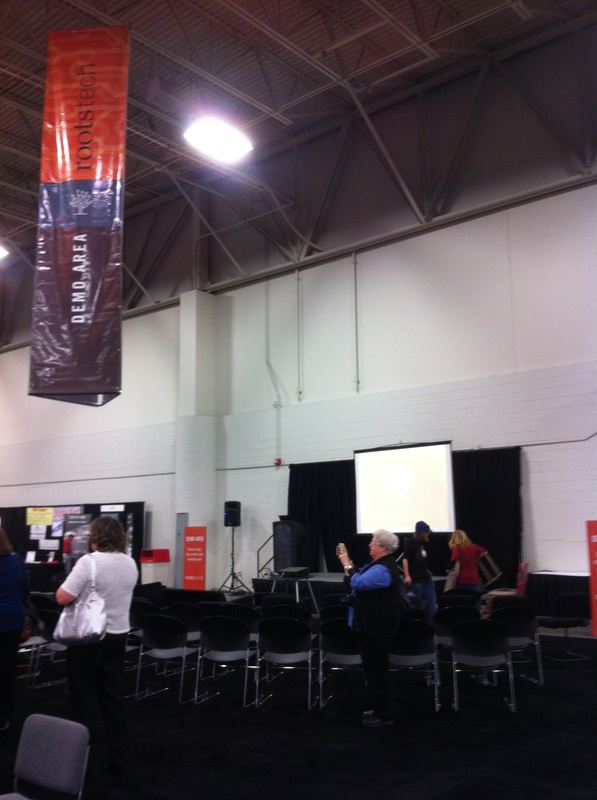  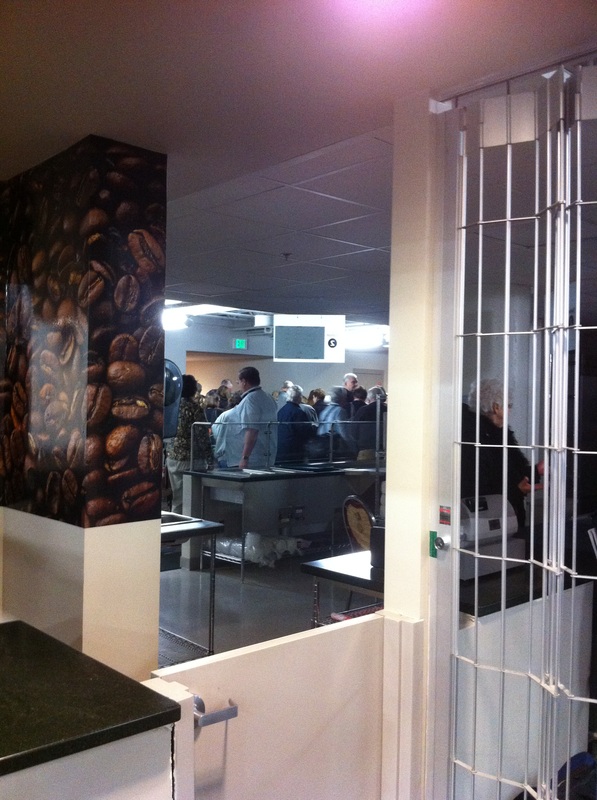 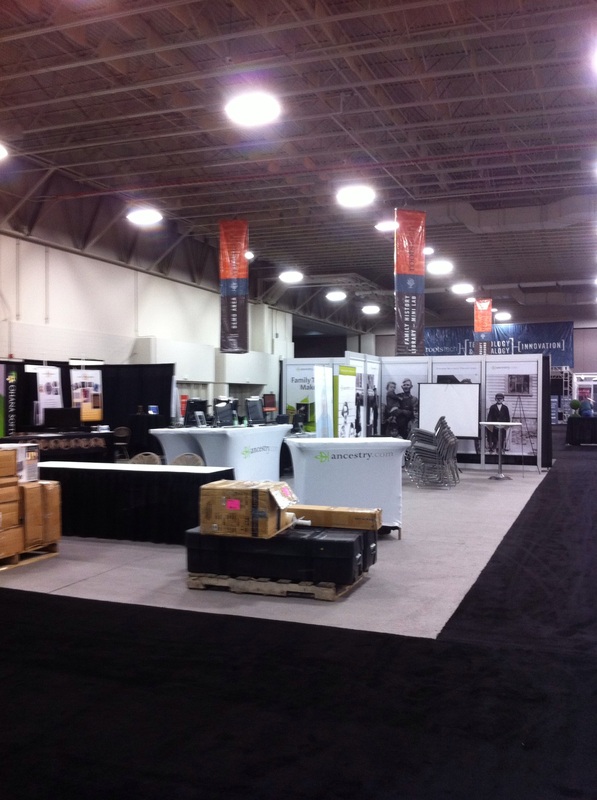  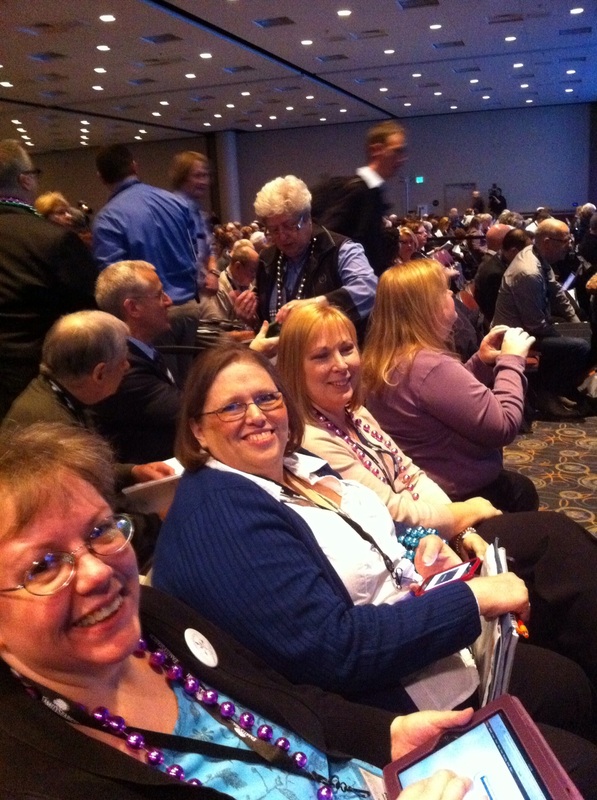 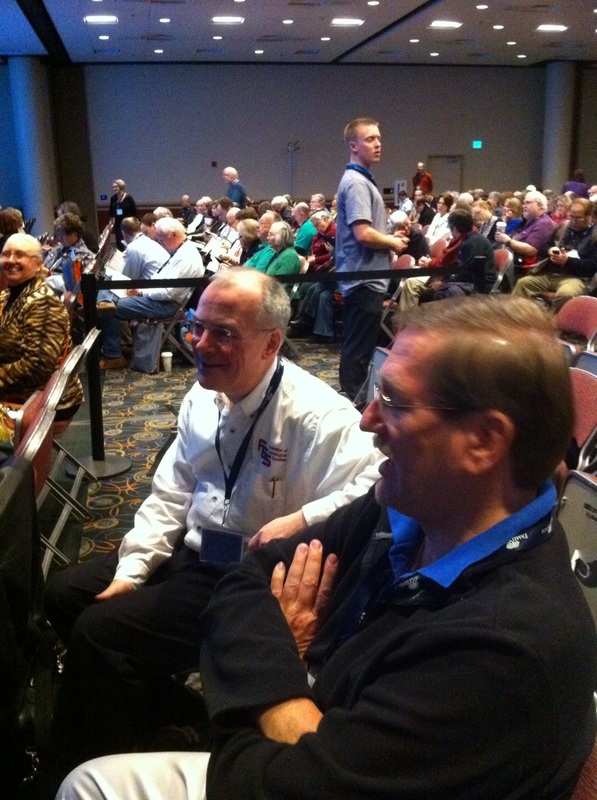 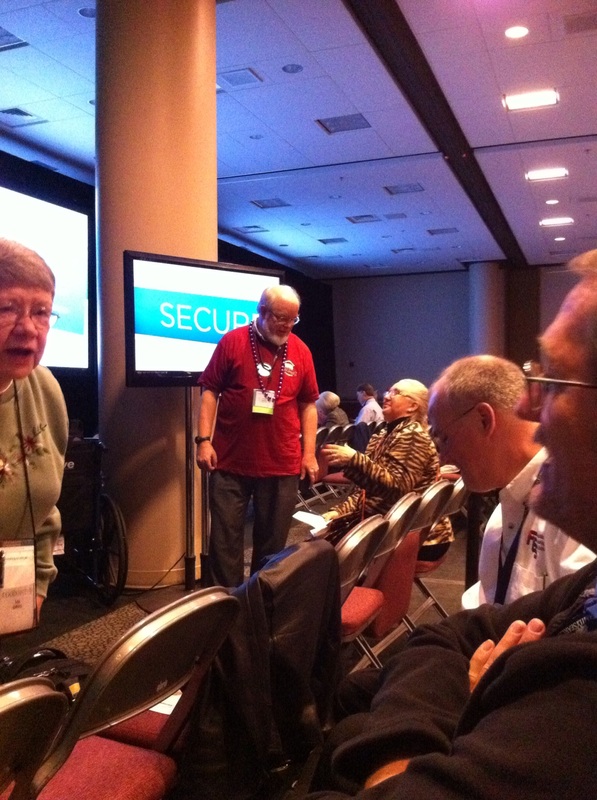 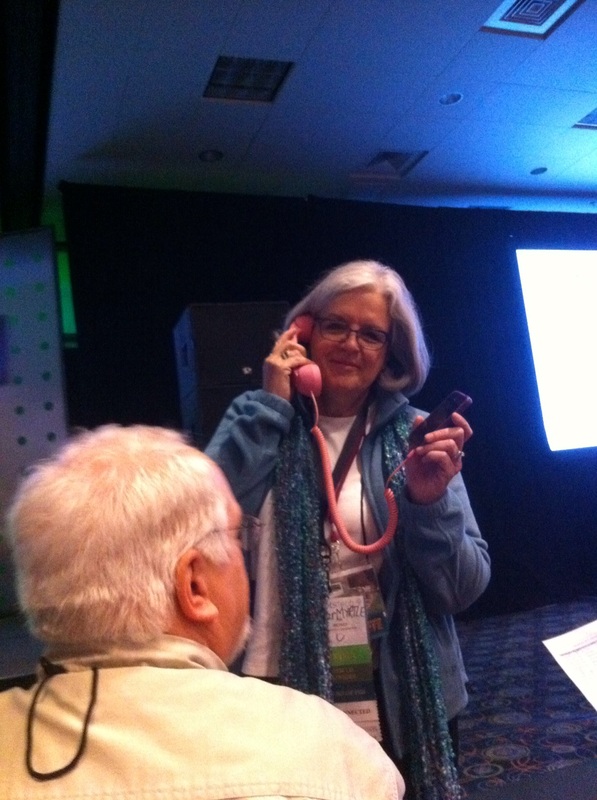    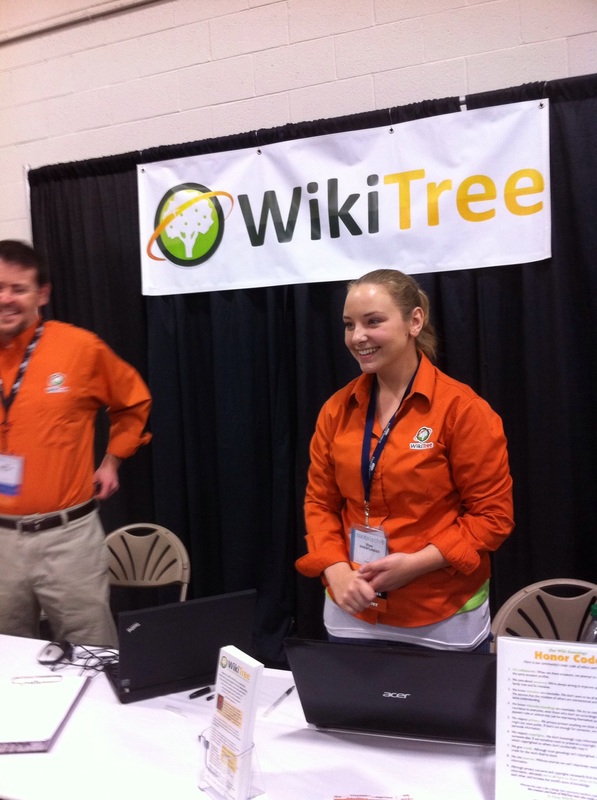     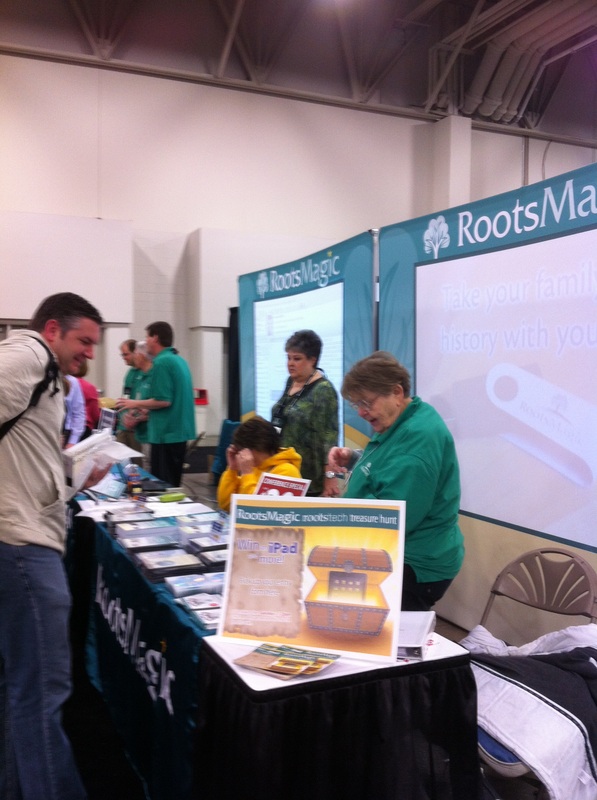 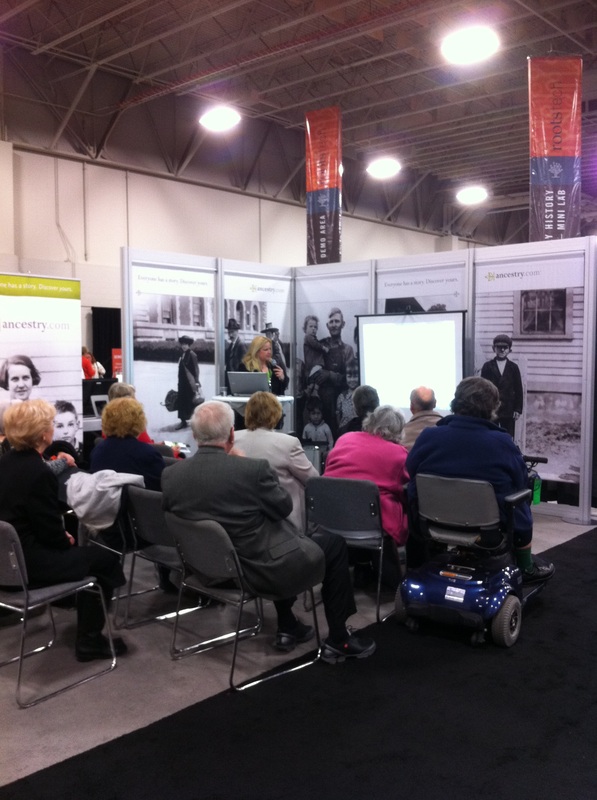 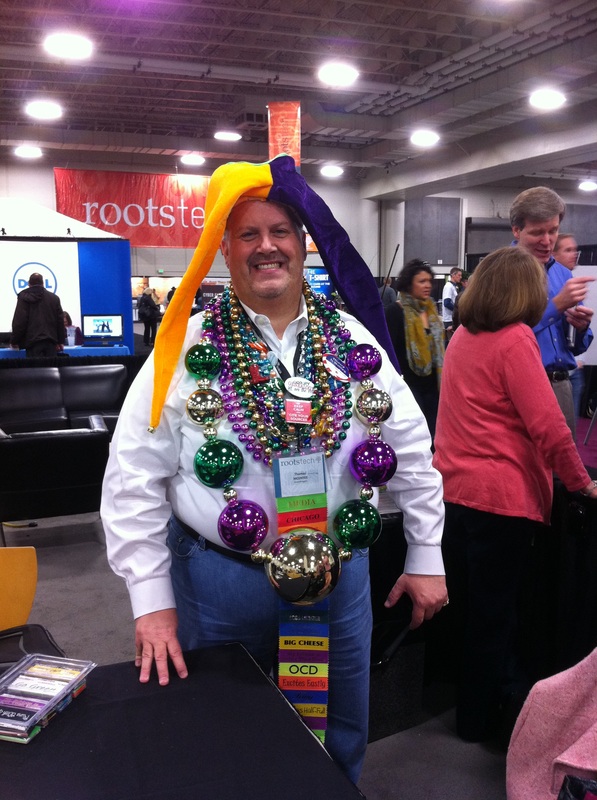 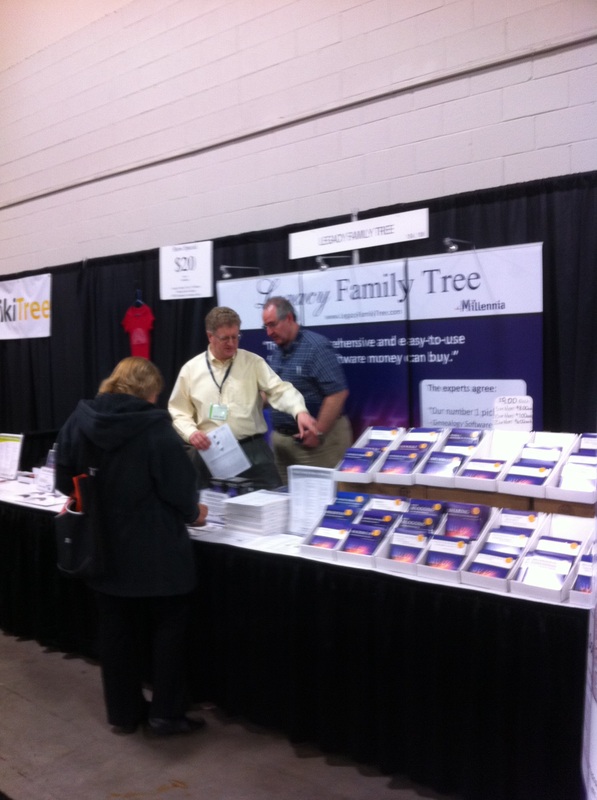  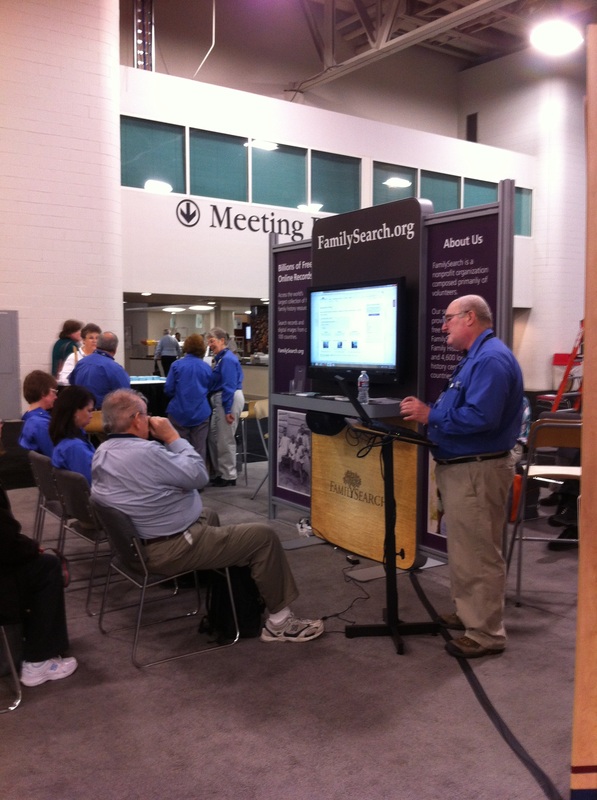         Okay. I dunno about you, but I'm getting hungrier by the day. Yes, hungrier for Italian food which I plan to prepare on Friday night in preparation of Marisa Tomei's episode of Who Do You Think You Are? on NBC. But? I'm also hungrier for more of Marisa Tomei's family story. I thought the highlight clip yesterday was fantastic. [Especially loved her on the sail boat. Cuz I totally plan to sail off on a sail boat to search for my ancestral lands. Don't you? I mean, if you're gonna dream, dream BIG.] Anywho, just when I thought I was completely excited to learn more about Marisa's family story, then came along this clip of more of her family story. See why I'm hungrier to know more about her family story? Absolutely can't wait for Marisa's episode to air Friday on NBC, 10 Feb 2012 at 7pm CST. And? I'm a wee jealous of her Italian roots. I've uncovered absolutely none so far in my own family. Why, of why, do I have such a love for Italian food? Marisa is the closest I will have been to Italian research. So you bet I'll be watching Friday night. And eating. ;) ~Caroline Remember how I said it'd be a pretty neat idea to make and/or serve food that matched the celebrity's ancestry for Who Do You Think You Are? Yeah. So. Guess who's up this next Friday on Who Do You Think Are? That's right. Marisa Tomei. [Duh. I gave the answer in the title of the post.] And Marisa means Italian food. I think I'll look for an Italian recipe on Pinterest. [Why not?] While I'm looking, here's a preview of Marisa Tomei's Who Do You Think You Are episode coming up this Friday, 10 Feb 2012 at 7pm CST on NBC. ~Caroline Okay. Who absolutely loved the season premiere of Who Do You Think You Are last Friday night? Yeah. I know. I'm a wee biased, but I think this was the best one yet. It certainly was the first time I watched one with other genealogists. In the same room. What a difference that made. I was privileged to watch it with some awesome genealogy friends at the historic Peery Hotel in Salt Lake City. The bartender freely gave up the remote to the T.V. and we pretty much had the run of the place. WOW! But not only was the company outstanding, but so was the show. Martin Sheen's story was fascinating, and it was interesting how they touched upon two different parts of his tree ~ the Irish and the Spanish. It was even more fascinating to see how Martin Sheen's life paralleled his ancestors' lives when it comes to activism. I also think it was interesting to see that his ancestors' stories weren't so pretty and perfect and that their journey had, indeed, been very hard. It doesn't matter who you are. Celebrity or everyday folk. Alive or dead. We're all alike when it comes to having a family story. A real family story chock full of the good times and the bad. Trials and jubilation. Tears and smiles. The common thread through all of our ancestors' stories is their perseverance, which leads us each into our own family stories. Following are a highlight clip and 2 deleted scenes from Martin Sheen's episode. Enjoy. ~Caroline
[I first met Jennifer Wilson on Twitter. She started following me. Then I followed her back. Then we just started tweeting back and forth. One evening I tweeted about making my Paw Paw's Corn Chowder for dinner. And Jennifer replied back that it sounded delicious and would I mind sharing it. So I did. I tweeted my Paw Paw's Corn Chowder recipe. She laughed and remarked that that was the first time she'd seen someone tweet a recipe. <grin> Jennifer Wilson's family story is so amazing, and what she and her family did is so awe-inspiring. I highly recommend her book, and I feel honored and blessed to share her story with you. Once you start reading it, you won't be able to put it down until you're done. And then? Then you'll want to go find your family story too. But don't take my word for it. Listen to Jennifer's story... ~Caroline] 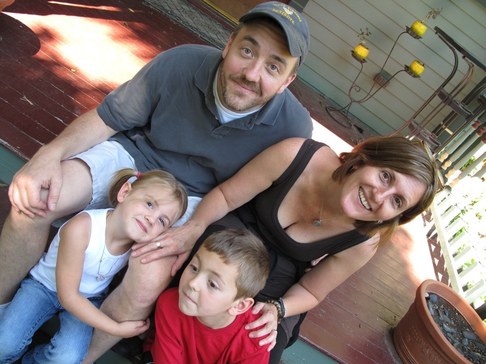 The day we left. [Used with permission.] The day we left. [Used with permission.] Off the Grid Genealogy I set out to take a family sabbatical and write a nice travelogue. I ended up with a kamikaze genealogy mission haunted by dead ancestors, dark secrets, bootleg liquor and sheep on a spit. By Jennifer Wilson “Radošević people, there are good and bad ones.” Viktor let out a slow, rumbling laugh that bordered on the diabolical. “Which Radošević are you?” This is the kind of ominous taunt you encounter when you take your genealogy search out of the archives and into the analog world. An old man, laughing, hinting that your homeland village may or may not (but probably!) aligned with Nazis and Fascists in World War Two. And oh, by the way? We’re not sure if your people had anything to do with it (but probably!). This was so very far from the pleasant, rustic tale I set out to discover when my husband Jim and our two young children returned to the ancient Croatian mountain village of my ancestors to live, recovering the lost lessons of my great-grandparents. It wasn’t all roasted sheep on a spit and frolicking through meadow flowers, as you’ll find out in Running Away to Home (St. Martin’s Press), my book about our crazy adventure. Though there is a decent amount of frolicking. And roasting things on spits. But, as you know, genealogy isn’t for lightweights. When you go rooting around the ancestors’ stomping grounds, you find out things you weren’t expecting. See, the tiny village of Mrkopalj is an odd place. Oddly beautiful, tucked away in the evergreen-covered mountains of northern Croatia. The region where it’s located is oddly empty, as in barely populated since even before the Turks tried to invade. When they did, the Habsburgs sent pirates and outcasts to live there just so the place didn’t look totally free for the taking (Recovered Family Fact Number One). And, well, just standard-issue odd. Our drunken landlord Robert hadn’t finished our rooms when we arrived, jet-lagged and wary, unsure we wanted to spend the next several months in a Balkan construction zone. Which was, by the way, next door to neighbors who kept cattle on the first floor of their house. In the midst of a neighborhood where every single person mowed their lawn with a slingblade. You may be asking yourself why a mother would drag her family across the globe and back a century just to live like the ancestors. Well, it’s because I’m odd, too. (If you’ve read this far, I’m assuming we might be kindred spirits in the oddness department. Or maybe you’re just waiting for me to get to the point. Yes! The point! There is one. Here it comes.) I’m odd because I love history. Adore antique things. My idea of a good time is interviewing old people. Instead of dating, my husband and I restored Victorian houses. And yet, I can’t do traditional genealogy. I’m convinced I have some sort of genealogical dyslexia. One look at a family tree, a mere mention of the words “first cousin, twice removed,” and my brain goes into an opossum-like paralysis. I simply can’t comprehend the book work, and I don’t understand the protocol. My mind doesn’t operate that way. I’m jealous of those who do. 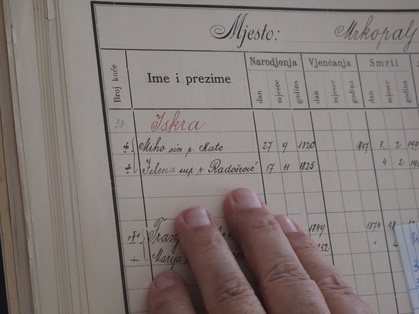 [Used with permission.] [Used with permission.] And so, when my ancestors came calling (as dead ancestors do), I took a different tack. When someone with my special (lack of) skills becomes obsessed with the family tree, we have to flat-out climb the thing. It began when my great aunt, Sister Mary Paula Radošević, passed away—the last of the immigrant relatives—I inherited her personal papers. On the night after her funeral, I got lost in the family history of the ancient mountain village of Mrkopalj, Croatia. The ancestors whispered in my ear, tempting my mom-frazzled brain with a simpler life in the Old Country. I wanted my kids out of soccer practice and ballet, and into the branches of apple trees. I wanted Jim back from his office computer, walking with me through the meadow. So, with lots of weird and wonderful twists of fate in between, we returned to the same place Valentin and Jelena Radošević came from 100 years ago. We lived there for several months, immersed in that simple life I dreamed of. It’s a very special, thing to walk in the steps of the ancestors. To page through the ancient Book of Names in the church, or interview the old ones through my interpreter, Stefanija, who was also everybody’s favorite bartender at the local café. 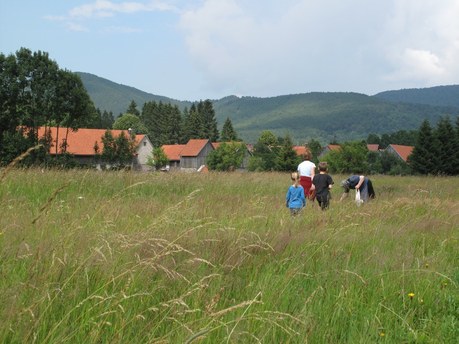 Gathering tea with Manda [Used with permission.] Gathering tea with Manda [Used with permission.] Which brings us back to Viktor’s kitchen, where his wife Manda is putting on tea from flowers she picked on the mountain. He’s telling me about the rough history of Mrkopalj, and reminding me that I would probably never know what happened to my people, because no one kept up with them (dammit, Mom!). But most certainly they’d been entwined in Croatia’s 1000-year history of war. That during World War Two they’d have been forced, like everyone, to choose between Communists and Nazis, if they wanted to survive. And no, I can’t tell you all the details. What? I can’t tell you every single thing, or my publisher would kill me! But we also learned that the ancestors sang songs as they worked in the forest, and lived through a beautiful bustling age when the lumber mills were booming and everybody had a cow in the yard and chickens for the pot. They ski’d in the powder snow that fell from October to April, which was so deep they had to wear snowshoes to the mercantile. I have a flimsy paper trail from that time, at best. But I (Jim) did just enough research to know that I’m probably related to most of Mrkopalj. I found a few long-lost relatives, but a village full of family that I’m still in touch with. And really, that’s good enough for me. I believe I am my own version of a genealogist. Maybe just the Braille version, and an odd one at that. Either way, we’ve all found our way home. 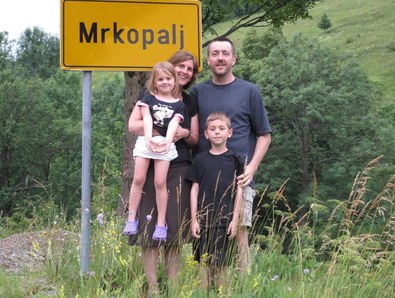 First shot, before arrival. [Used with permission.] First shot, before arrival. [Used with permission.] Jennifer Wilson is a writer for such magazines as Esquire, National Geographic Traveler, Better Homes & Gardens, Parents,Traditional Home, Midwest Living and many national newspapers and magazines. Running Away to Home is her first book. This weekend? We're diggin' up bones.
Here are 3 scans for this week's challenge of a copy of Lord Tennyson's Enoch Arden. Who was Mrs. Lyle Bones and Libbie F. Ward? How did they know each other? What was Mrs. Lyle Bones' first and maiden name? Who were their families? Were they related? Can we do it? Can we dig up their stories in the next 48 hours? There's only one way to find out. Y'all ready to find some family stories? You've been challenged. ;) Join us in the 48 Hour Ephemera Challenge Forum! ~Caroline  Today's post is from guest poster Helen Spencer, who is the founder of SaveEveryStep.com a UK based site where you can capture family stories while traveling life's journey and share them in a timeline fashion online. She also blogs at saveeverystep.com/family-stories-blog.aspx where she currently is blogging the series 'Life's a Journey'. I encourage you to stop by her sites. She's got great blogging style because she's so personable. Don't take my word for it, though. Check her out. ~Caroline Guest Post by Helen Spencer of SaveEveryStep.com My eldest son turns 12 next week. My millennium baby has managed to suck up 12 years of my life without me hardly noticing the time pass. I imagine my own parents felt the same way about me when I turned 12, or 21, then 40..... As a 12 year old child, my interest in my parents was minimal, to put it politely. (Here is the slightly less polite version). I continued to take a nonchalant disinterest in their lives and stories throughout my childhood years and on into my teens. I saw them as historic. Ancient. Irrelevant. This (at best) apathy, (at worst) mild contempt went on until I became a parent to the aforementioned Millennium Boy at the age of 32. At this point, I developed a sense of my own responsibility and awareness of my mortality which gave me the ability to recognise that my parents were real people, with real lives who had dutifully nurtured me for so many years. The defining earthquake, however, arrived as an earth-shattering TEN on the Richter Scale in April 2006 when my mother went and died. Heart-achingly ironic. I finally wanted to know everything there was to hear about her life as a young woman, how she met my dad, her days at school, growing up in World War II Britain, her boyfriends, the fashions, her mistakes and her triumphs. But it was simply too late. Stupid, stupid me. I had spent countless hours researching our family tree's dead 'uns, without a moment's thought about the most precious people of all - those who were standing right beside me. So, what of it? Well, I ain't dead yet. My disinterested, contemptuous, apathetic children WILL have my stories preserved as a legacy for their future. I WILL capture each and every moment of their growth in a set of embarrassing photographs. I WILL spill my guts about the highs and lows of my existence in my narrative for them. I WILL leave them with the gift of memories. So, assuming you ain't dead yet either (and not reading this from the Other Side), do yourself a favour and give the ancient historical family members a rest for a few days. Turn and concentrate on the living. Do the leg-work for the next generation and create a vault of your contemporary family memories so that they won't have to. There are plenty of resources out there to help you, but for something different, try www.SaveEveryStep.com - you can lay out your life memories on a chronological timeline in words and pictures, and it's free to use. You can find more weekly Blog doses of family nostalgia and the serialisation of letters home from World War II by following this link. Helen Spencer Founder www.SaveEveryStep.com Please feel free to share this blog post with, like, everyone you know. And then? Share it with everyone you don't know. If you want. |


|
© Copyright For Your Family Story 2016 - All Rights Reserved
|